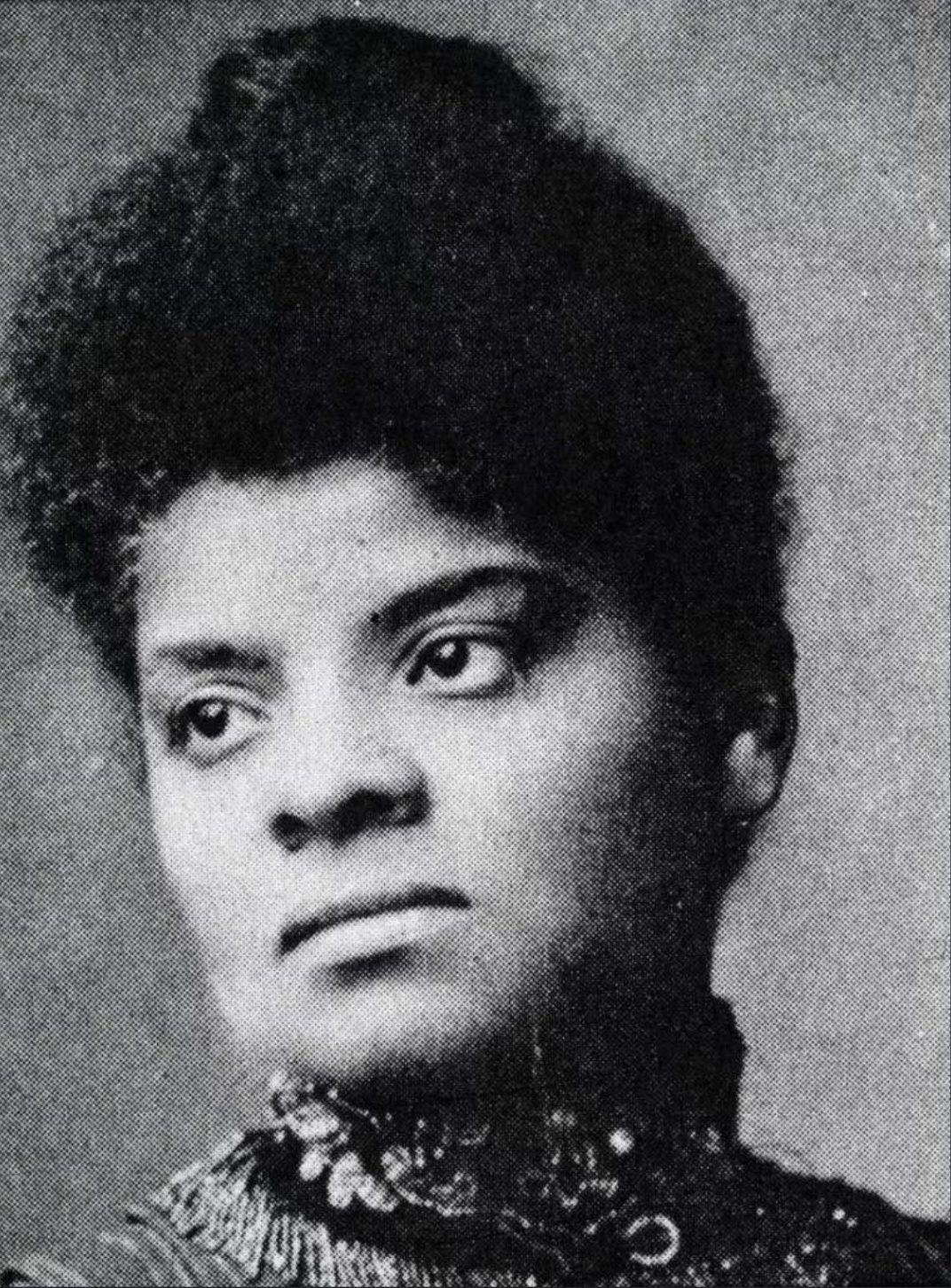
Ida B. Wells
Ida B. Wells-Barnett, a preeminent luminary in American investigative journalism, education, and early civil rights leadership, emerged onto the historical canvas on July 16, 1862, in Holly Springs, Mississippi, her trajectory indelibly marked by the pernicious institution of slavery and subsequently emancipated by the salient proclamation of the Emancipation Proclamation. A fervent advocate for racial and gender equality, Wells dedicated her life’s labor to combatting entrenched prejudice and violence, with a particular emphasis on the often-overlooked dimension of women’s rights.
Initiating her professional sojourn as an educator in Memphis, Tennessee, Wells became a co-owner and prolific contributor to the Memphis Free Speech and Headlight newspaper. This journalistic venture served as the crucible for her incisive reporting on racial segregation and inequality, attaining national resonance within the corpus of Black-owned newspapers.
The zenith of Wells’s journalistic enterprise unfolded during the 1890s, a period during which she meticulously chronicled the nefarious phenomenon of lynching in the United States. Her investigative acumen found expression through seminal articles and influential pamphlets, most notably Southern Horrors: Lynch Law in all its Phases and The Red Record. Wells’s oeuvre disrupted prevailing narratives perpetuated by Whites, dispelling the fallacious notion that all Black lynching victims were intrinsically culpable of crimes. Instead, she probed the inherent brutality of lynching, offering a sophisticated sociological analysis that delineated lynching as a tool wielded by Whites to terrorize African Americans in the South, ostensibly due to perceived economic and political competition.
Wells’s impact transcended the realm of journalism; she stood as one of the founding pillars of the National Association for the Advancement of Colored People (NAACP). Her commitment to justice for African Americans dovetailed seamlessly with her active participation in women’s rights and the suffrage movement, a multifaceted engagement underscored by her instrumental role in establishing several women’s organizations.
Her eloquence as a speaker manifested through extensive lecture tours, both nationally and internationally, further amplifying her influence as a persuasive advocate for racial and gender equality. Wells’s discursive prowess commanded attention and respect, underscoring her capacity to effectuate change through the power of rhetoric.
In recognition of her superlative contributions, the Pulitzer Prize committee, in 2020, bestowed upon Wells a special citation for her “outstanding and courageous reporting on the horrific and vicious violence against African Americans during the era of lynching.” This distinguished accolade served as an unequivocal affirmation of the enduring impact of Wells’s journalistic endeavors.
The indomitable legacy of Ida B. Wells-Barnett persists as an indelible testament to the transformative potential of rigorous investigation and resolute advocacy in challenging systemic injustices. Her life’s work stands as a beacon, beckoning future generations to uphold the mantle of equality and justice within the annals of the United States’ historical tapestry.
Norwood, Arlisha. “Ida B. Wells-Barnett.” National Women’s History Museum, 2017, www.womenshistory.org/education-resources/biographies/ida-b-wells-barnett .
Carrie Chapman Catt Center for Women and Politics. “Ida B Wells -.” Archives of Women’s Political Communication, 2019, awpc.cattcenter.iastate.edu/directory/ida-b-wells/.
Boomer, Lee. “Life Story: Ida B. Wells.” Women & the American Story, 3 Aug. 2022, wams.nyhistory.org/modernizing-america/fighting-for-social-reform/ida-b-wells/.
 ©️ 2023 VOXELLE. All Rights Reserved.